📖 Daily Book Summary 007: When Things Fall Apart

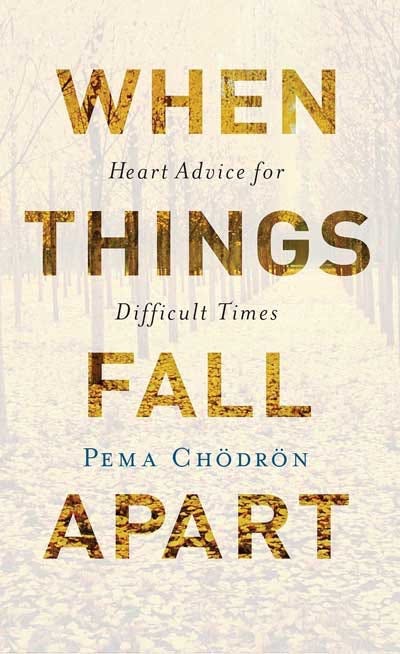
Introduction:
Welcome to the seventh edition of Daily Book Summary! Today, we dive into Pema Chödrön's beloved spiritual classic When Things Fall Apart: Heart Advice for Difficult Times. This book offers profound wisdom for navigating life's darkest moments—not by escaping them, but by leaning into the discomfort and discovering that breakdown can be the gateway to breakthrough.
As Chödrön puts it: "Things falling apart is a kind of testing and also a kind of healing. The healing comes from letting there be room for all of this to happen."
Here are 100 Quotes from When Things Fall Apart:
On the Core Wisdom
1. "Things falling apart is a kind of testing and also a kind of healing. We think that the point is to pass the test or to overcome the problem, but the truth is that things don't really get solved. They come together and they fall apart. Then they come together again and fall apart again. It's just like that."
2. "The healing comes from letting there be room for all of this to happen: room for grief, for relief, for misery, for joy."
3. "Chaos should be regarded as extremely good news."
4. "When things fall apart and we're on the verge of we know not what, the test of each of us is to stay on that brink and not concretize."
5. "The spiritual journey is not about heaven and finally getting to a place that's really swell."
6. "We think that the point is to pass the test or to overcome the problem, but the truth is that things don't really get solved."
7. "They come together and they fall apart. Then they come together again and fall apart again. It's just like that."
8. "Life is a good teacher and a good friend."
9. "Things fall apart, and it's happening constantly. It's like the weather."
10. "In the process of letting go, you will lose many things from the past, but you will find yourself."
On Fear
11. "Fear is a natural reaction to moving closer to the truth."
12. "Fear is a universal experience. Even the smallest insect feels it. We wade in the tidal pools and put our finger near the soft, open bodies of sea anemones and they close up. Everything spontaneously does that."
13. "It's not a terrible thing that we feel fear when faced with the unknown. It is part of being alive, something we all share."
14. "We react against the possibility of loneliness, of death, of not having anything to hold on to."
15. "So the next time you encounter fear, consider yourself lucky. This is where the courage comes in."
16. "Usually we think that brave people have no fear. The truth is that they are intimate with fear."
17. "Fear is a natural reaction, but if we recognize it as a sign that something important needs to be acknowledged, we can focus on accepting the truth."
18. "The most fundamental aggression to ourselves, the most fundamental harm we can do to ourselves, is to remain ignorant by not having the courage and the respect to look at ourselves honestly and gently."
19. "Fear is a teacher, not an enemy."
20. "When you begin to touch your heart or let your heart be touched, you begin to discover that it's bottomless."
On Groundlessness
21. "Things falling apart is a kind of testing and also a kind of healing."
22. "We think that the point is to pass the test or to overcome the problem, but the truth is that things don't really get solved."
23. "The bad news is that you're falling through the cracks, and the good news is that there's nowhere to land."
24. "For those who want something to hold on to, life is even more inconvenient."
25. "There's no certainty about anything. This basic truth hurts, and we want to run away from it."
26. "We spend all our energy trying to avoid the groundlessness of not knowing."
27. "Learning to stay with discomfort—not immediately seeking relief—is how we develop wisdom."
28. "The only way to ease our fear and be truly happy is to acknowledge our fear and to learn how to experience it fully."
29. "Staying with brokenheartedness, staying with a choked-up feeling, staying with fear—that is the path."
30. "To be fully alive, fully human, and completely awake is to be continually thrown out of the nest."
On Hope and Fear
31. "Hope and fear is a feeling with two sides. As long as there's one, there's always the other. This is the root of our pain."
32. "Abandoning hope is an affirmation, the beginning of the beginning. You could even put 'Abandon hope' on your refrigerator door instead of more conventional aspirations like 'Every day in every way I'm getting better and better.'"
33. "Thinking that we can find some lasting pleasure and avoid pain is what in Buddhism is called samsara, a hopeless cycle that goes round and round endlessly and causes us to suffer greatly."
34. "Scrambling for security has never brought anything but momentary joy. It's like changing the position of our legs in meditation. Our legs hurt from sitting cross-legged, so we move them. And then we feel, 'Phew! What a relief!' But two and a half minutes later, we want to move them again."
35. "We keep moving around seeking pleasure, seeking comfort, and the satisfaction that we get is very short-lived."
36. "Hope and fear come from feeling that we lack something; they come from a sense of poverty."
37. "Only to the extent that we expose ourselves over and over to annihilation can that which is indestructible be found in us."
38. "Abandoning hope is a beginning—not an end."
39. "When we stop hoping for things to be different, we can actually start living."
40. "Hopelessness is the foundation of fearlessness."
On Self-Compassion (Maitri)
41. "It is said that we can't attain enlightenment, let alone feel contentment and joy, without seeing who we are and what we do, without seeing our patterns and our habits. This is called maitri—developing loving-kindness and an unconditional friendship with ourselves."
42. "Could we just settle down and have some compassion and respect for ourselves? Could we stop trying to escape from being alone with ourselves?"
43. "What about practicing not jumping and grabbing when we begin to panic? Relaxing with loneliness is a worthy occupation."
44. "There's no way to benefit anybody unless we start with ourselves."
45. "The most fundamental harm we can do to ourselves is to remain ignorant by not having the courage and the respect to look at ourselves honestly and gently."
46. "Start where you are. This is very important. You can't start somewhere else."
47. "The only way to take care of others is to take care of yourself first."
48. "Self-compassion is not self-indulgence; it's self-respect."
49. "We must be willing to see ourselves completely—the good, the bad, and the ugly—with an open heart."
50. "Maitri means being able to befriend ourselves—to be kind and gentle with who we are."
On Not Causing Harm
51. "Not causing harm requires staying awake. Part of being awake is slowing down enough to notice what we say and do."
52. "The more we witness our emotional chain reactions and understand how they work, the easier it is to refrain. It becomes a way of life to stay awake, slow down, and notice."
53. "Not causing harm obviously includes not killing or robbing or lying to people. It also includes not being aggressive—not being aggressive with our actions, our speech, or our minds."
54. "Learning not to cause harm to ourselves or others is a basic teaching on the healing power of nonaggression."
55. "Aggression is the source of all suffering."
56. "When we stop being aggressive with ourselves, we naturally stop being aggressive with others."
57. "Nonaggression doesn't mean passivity; it means responding with wisdom rather than reacting with fear."
58. "The most aggressive act is the refusal to look at ourselves honestly."
59. "Nonaggression is the foundation of peace—both inner and outer."
60. "We can learn to pause before we speak or act, and that pause changes everything."
On Pain and Pleasure
61. "Whoever got the idea that we could have pleasure without pain? It's promoted rather widely in this world, and we buy it. But pain and pleasure go together; they are inseparable."
62. "They can be celebrated. They are ordinary. Birth is painful and delightful. Death is painful and delightful. Everything that ends is also the beginning of something else."
63. "Pain is not a punishment; pleasure is not a reward."
64. "First, we like pleasure; we are attached to it. Conversely, we don't like pain. Second, we like and are attached to praise. We try to avoid criticism and blame. Third, we like and are attached to fame. We dislike and try to avoid disgrace. Finally, we are attached to gain, to getting what we want. We don't like losing what we have."
65. "These eight worldly concerns keep us trapped in a cycle of suffering."
66. "The middle way is not about finding pleasure or avoiding pain—it's about being present with both."
67. "Pleasure and pain are like two sides of the same coin; you can't have one without the other."
68. "When we stop running from pain, we discover that it has much to teach us."
69. "The avoidance of pain is the source of most of our problems."
70. "Pain is not a mistake; it's part of the curriculum."
On Death and Impermanence
71. "Death in everyday life could also be defined as experiencing all the things that we don't want. Our marriage isn't working; our job isn't coming together."
72. "Having a relationship with death in everyday life means that we begin to be able to wait, to relax with insecurity, with panic, with embarrassment, with things not working out."
73. "All anxiety, all dissatisfaction, all the reasons for hoping that our experience could be different are rooted in our fear of death."
74. "Fear of death is always in the background. As the Zen master Shunryu Suzuki Roshi said, 'Life is like getting into a boat that's just about to sail out to sea and sink.'"
75. "Basically, disappointment, embarrassment, and all these places where we just cannot feel good are a sort of death."
76. "We've just lost our ground completely; we are unable to hold it together and feel that we're on top of things. Rather than realizing that it takes death for there to be birth, we just fight against the fear of death."
77. "Impermanence is not a flaw; it's the very nature of life."
78. "The only thing we can count on is that nothing will stay the same."
79. "When we stop fighting impermanence, we start living."
80. "Death is not an event; it's a process—and it's happening right now."
On Addiction and Escapism
81. "All addictions stem from this moment when we meet our edge and we just can't stand it. We feel we have to soften it, pad it with something, and we become addicted to whatever it is that seems to ease the pain."
82. "In fact, the rampant materialism that we see in the world stems from this moment. There are so many ways that have been dreamt up to entertain us away from the moment, soften its hard edge, deaden it so we don't have to feel the full impact of the pain that arises when we cannot manipulate the situation to make us come out looking fine."
83. "We use food, sex, work, shopping, and screens to avoid being present with ourselves."
84. "The moment we meet our edge is the moment of potential transformation."
85. "Addiction is the opposite of freedom—it's being controlled by the need to escape."
86. "The only way out is through."
87. "What we resist persists. What we embrace transforms."
88. "Staying with discomfort is the most radical thing we can do."
89. "The urge to escape is natural—but it's not the path."
90. "Freedom comes from staying, not from leaving."
On Perception and Reality
91. "What may appear to be an arrow or a sword we can actually experience as a flower. Whether we experience what happens to us as obstacle and enemy or as teacher and friend depends entirely on our perception of reality. It depends on our relationship with ourselves."
92. "We could say that the problem is not the problem; our relationship to the problem is the problem."
93. "We spend our whole lives trying to arrange the outside world to match our inner preferences—and it never works."
94. "When we change the way we look at things, the things we look at change."
95. "The world is a mirror of our mind."
96. "Nothing has inherent meaning except the meaning we give it."
97. "Our perception creates our reality—not the other way around."
98. "Freedom is not about changing what happens to us; it's about changing how we relate to what happens."
99. "The most powerful tool we have is our own mind."
100. "We can learn to see everything that happens as a teacher—even the hardest things, especially the hardest things." [summary]
Action Step:
The next time something falls apart—a plan, a relationship, an expectation—pause before you react. Instead of scrambling to fix it or escape it, take three conscious breaths. Ask yourself: "What if this breakdown is actually a breakthrough? What if this discomfort is my teacher?" Stay on the brink for just a little longer than you normally would. That pause is where healing begins.
See you tomorrow for the next book! 📚
"But life don't clickety-clack
Down a straight-line track
It comes together and it comes apart." - Ferron, Ain't Life a Brook
Thank you!